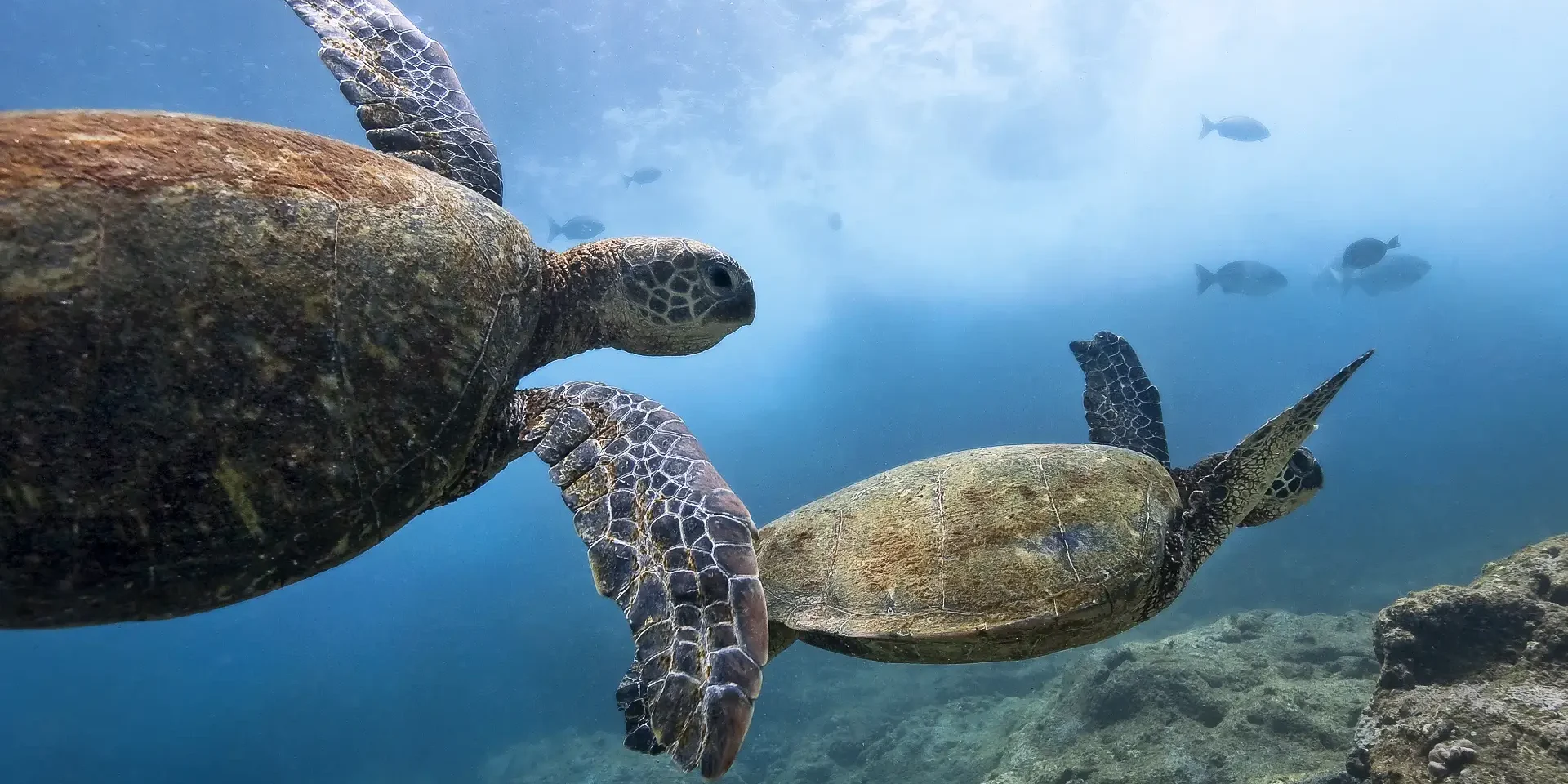
The first thing you notice on a Balicasag wall is the light. It falls away beneath your fins into deep blue, and somewhere around 18 m (60 ft) a green turtle usually cruises past like it owns the place. That’s a fairly ordinary morning of diving in Bohol, and it’s a big part of why this corner of the central Philippines keeps pulling divers back for another trip.
Bohol sits in the Visayas, ringed by Panglao Island, tiny Balicasag, Cabilao and a scatter of smaller reefs. Most people base themselves on Panglao — it’s a short drive from the airport — and dive a mix of gentle house reefs and steep walls that sit anywhere from a 10-minute to a 45-minute boat ride offshore.
Bohol Diving — Quick Facts
| Best season | Dry season, roughly November–May (peak visibility around March–May) |
| Water temp | Typically 26–29 °C (79–84 °F) year-round |
| Visibility | Usually 15–30 m (50–100 ft), site and season depending |
| Depth range | Shallow reef flats to walls dropping well past recreational limits |
| Difficulty | Mostly easy to moderate; some current and deep walls at Balicasag/Cabilao |
| Certification | Open Water is fine for most sites; Advanced helps for walls and current |
Where you’ll actually dive around Panglao
Panglao is the launchpad. The reefs right off Alona Beach are where most check-out dives and courses happen, and they’re better than “training reef” makes them sound — expect clouds of anthias, the odd cuttlefish, and enough nudibranchs to keep a macro shooter happy for a whole dive.
Napaling and the sardine ball
Napaling is the one that surprises people. A wall drops off just a short swim from shore, and hanging over it, most days, is an enormous shimmering ball of sardines that folds and splits as jacks and the occasional thresher shadow move through it. Freedivers love this site too, so you’ll often share the water with them overhead. It’s shallow enough that you get a long, easy dive out of it.
Arco Point, Kalipayan and the house reefs
Arco Point — sometimes called Hole in the Wall — has a small swim-through at around 12 m (40 ft) that pops you out onto the wall face. Kalipayan and the string of house reefs along the south coast are gentle, sloping sites loaded with small stuff: leaf scorpionfish, mantis shrimp, pipefish, and if your guide has sharp eyes, the odd pygmy seahorse on a sea fan. Want the whole species list? Here’s the marine life you can hope to see in Bohol, from the tiny critters to the big pelagics.
 Balicasag: turtles, walls and the jackfish tornado
If Bohol has a signature dive, this is it. Balicasag is a small island about 45 minutes by banca from Panglao, and its reef slopes are a protected marine sanctuary. Two things draw people here.
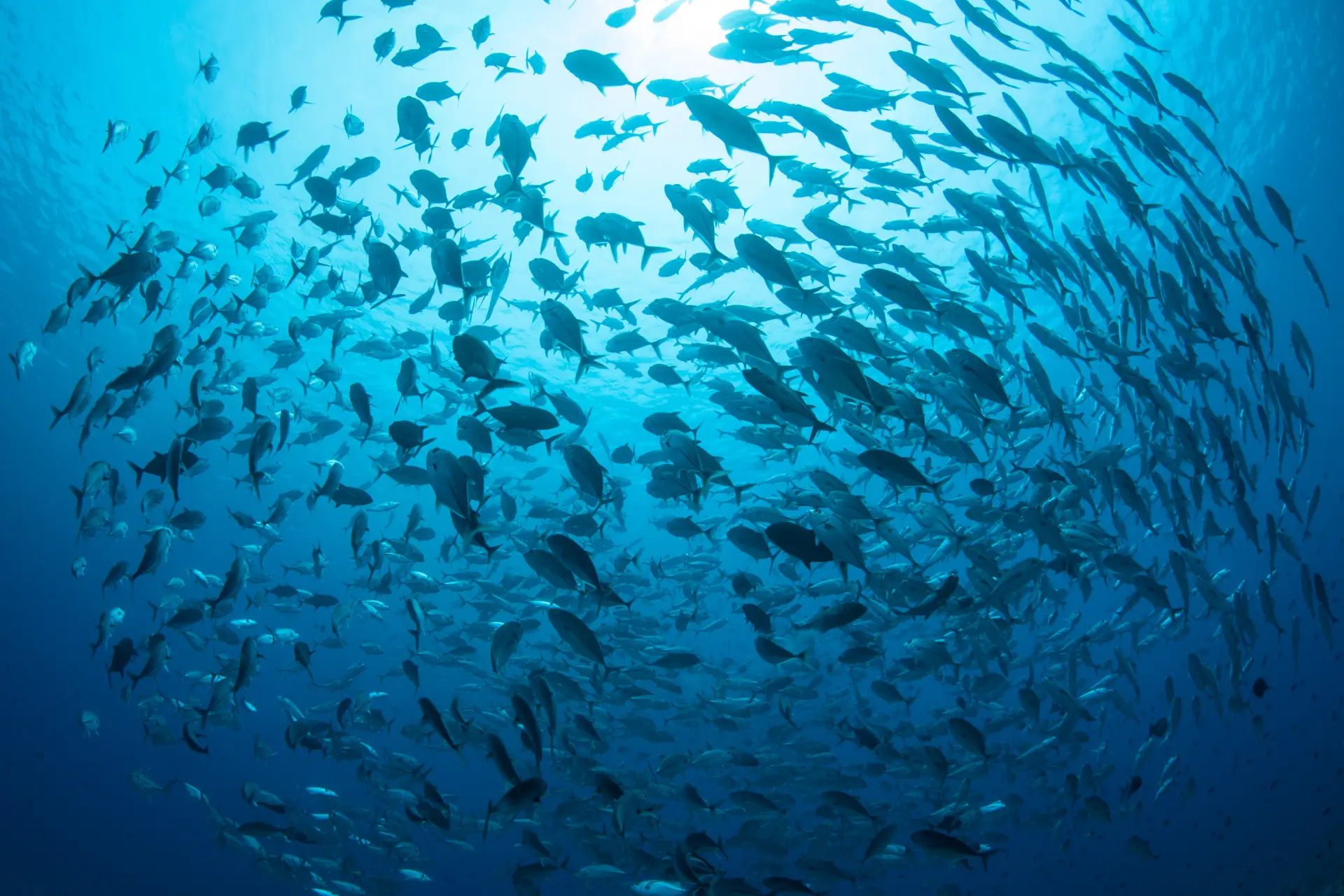
First, the turtles. Green turtles are close to guaranteed on sites like Black Forest and Diver’s Heaven, often resting on ledges or grazing while divers hover a respectful distance back. Second, the jackfish. At Diver’s Heaven a dense school of bigeye trevally swirls into a slow-moving tornado you can sit beneath and just watch. When the current lines up and the school is tight, it’s one of the best big-school moments in the country.
The walls themselves fall away fast, so buoyancy control matters — it’s easy to drift deeper than you planned while you’re staring at a turtle. Keep an eye on your computer and your guide. There’s more detail on the sanctuary’s sites and residents in our closer look at Balicasag Island for underwater explorers.
Hover under the jackfish tornado at Diver’s Heaven and you stop taking photos. You just watch a few thousand fish move as one animal.
Cabilao and the sites further out
Cabilao Island is a longer trip — usually a day out with a couple of dives — but it’s worth planning for. Gorgonian Wall is thick with sea fans and soft coral, and in the cooler months (roughly December to February) the site has a reputation for early-morning scalloped hammerhead sightings in the deep blue off the wall. That’s a deep, advanced-level dive with no guarantees, so treat any hammerhead day as a bonus rather than a booking.
Doljo Point on Panglao’s northwest tip and the muck-style patches around Anda on Bohol’s east coast round things out if you’re chasing frogfish, mandarinfish and the smaller weird stuff. Bohol quietly rewards divers who slow down and look closely.
Tip: Balicasag has a daily cap on visitor and diver numbers to protect the sanctuary, and boats sometimes rotate sites. Book a day or two ahead through your dive centre and go early — the morning boats usually get first pick of the best conditions.
When to go diving in Bohol
You can dive here all year, but the dry season from about November to May gives you the calmest crossings and the cleanest water, with visibility often at its best around March to May. The rainier months from June to October still deliver good diving — you just trade the odd blown-out day for fewer crowds and lower prices.
Water sits in the high-20s Celsius (high-70s to mid-80s Fahrenheit) all year, so a 3 mm wetsuit is plenty for most divers. If you get cold easily on repeat dives, a 5 mm or a hood won’t feel like overkill by the third dive of the day.
What you need to be certified for
Here’s the good news: Bohol is a genuinely forgiving place to learn to dive. The sheltered house reefs and warm, clear water make it a popular spot to do an Open Water course, and a fresh certification is enough for the bulk of what’s on offer.
That said, the sites that stick in your memory — the deep Balicasag walls, drift conditions, the hammerhead lottery at Cabilao — sit more comfortably within an Advanced Open Water certification. If you’re already certified, a refresher on the first day is smart before you point yourself down a wall. And a couple of things aren’t negotiable: dive within your training limits, always dive with a guide or buddy who knows the sites, and keep your hands off the wildlife. Turtles and sea fans don’t need touching to be photographed well.
Curious how this island stacks up against the rest of the country? See the best scuba diving in the Philippines for the wider picture.
Bohol diving FAQ
Do I need to be an experienced diver to enjoy Bohol?
No. Plenty of Panglao’s reefs suit newly certified divers, and it’s a well-regarded place to complete an Open Water course. An Advanced certification and good buoyancy just open up the deeper walls and current sites more comfortably.
Am I guaranteed to see turtles at Balicasag?
Nothing underwater is truly guaranteed, but green turtles are seen on the large majority of Balicasag dives — it’s one of the more reliable turtle spots in the region. Give them space and let them come to you.
Can I see whale sharks from Bohol?
Wild whale shark and dolphin encounters happen seasonally around Pamilacan Island. You may also hear about the provisioned whale shark site at Oslob on nearby Cebu — the feeding there is controversial for the way it changes the animals’ behavior, so it’s worth reading up and deciding for yourself before you book anything.
How many days should I plan for?
Give it at least three to four diving days. That’s enough to cover the Panglao reefs, run a couple of Balicasag trips and still fit a day out to Cabilao without rushing your surface intervals.
Ready to plan it?
Bohol is one of those rare destinations that works for a first ocean dive and still gives seasoned divers a jackfish tornado to grin about. Sort out flights and where to stay, get your certification squared away before you fly, and leave room in the plan for one more dive at Balicasag — you’ll want it.