Shadows in the Blue: A Guide to the Sharks of the Red Sea
For as long as humans have looked at the ocean, sharks have occupied a space between myth and reality. In the Red Sea, this connection is even more profound. Here, the deep blue of the abyss meets the vibrant life of the reef, creating a playground for some of the most iconic shark species on the planet.
Diving with sharks in the Red Sea isn’t just about the “scare” or the adrenaline rush; it is about witnessing the perfection of evolution. These animals are the “cleaners” of the reef, the regulators of the ecosystem, and a sign of a healthy, thriving ocean. If you are heading to the Sinai Peninsula or the southern Egyptian reaches, here is everything you need to know about the shadows in the blue.
Why the Red Sea is a Shark Haven
The Red Sea is a unique biological corridor. It is narrow, deep, and relatively isolated, which has led to high rates of endemism. But for sharks, the real draw is the topography.
Because the Red Sea is essentially a giant rift, many of its most famous dive sites are offshore pinnacles—mountains that rise from 500 meters deep to just below the surface. These pinnacles act as “oceanic pit stops,” where currents bring in nutrient-rich water, attracting the schools of fish that sharks rely on for food. Sites like The Brothers (El Akhawein), Daedalus, and Elphinstone are the legendary “Shark Triangle” of the region.
The Iconic “Big Three”
While there are over 40 species of sharks in the Red Sea, three specific species dominate the bucket lists of traveling divers.
 1. The Scalloped Hammerhead (Sphyrna lewini)
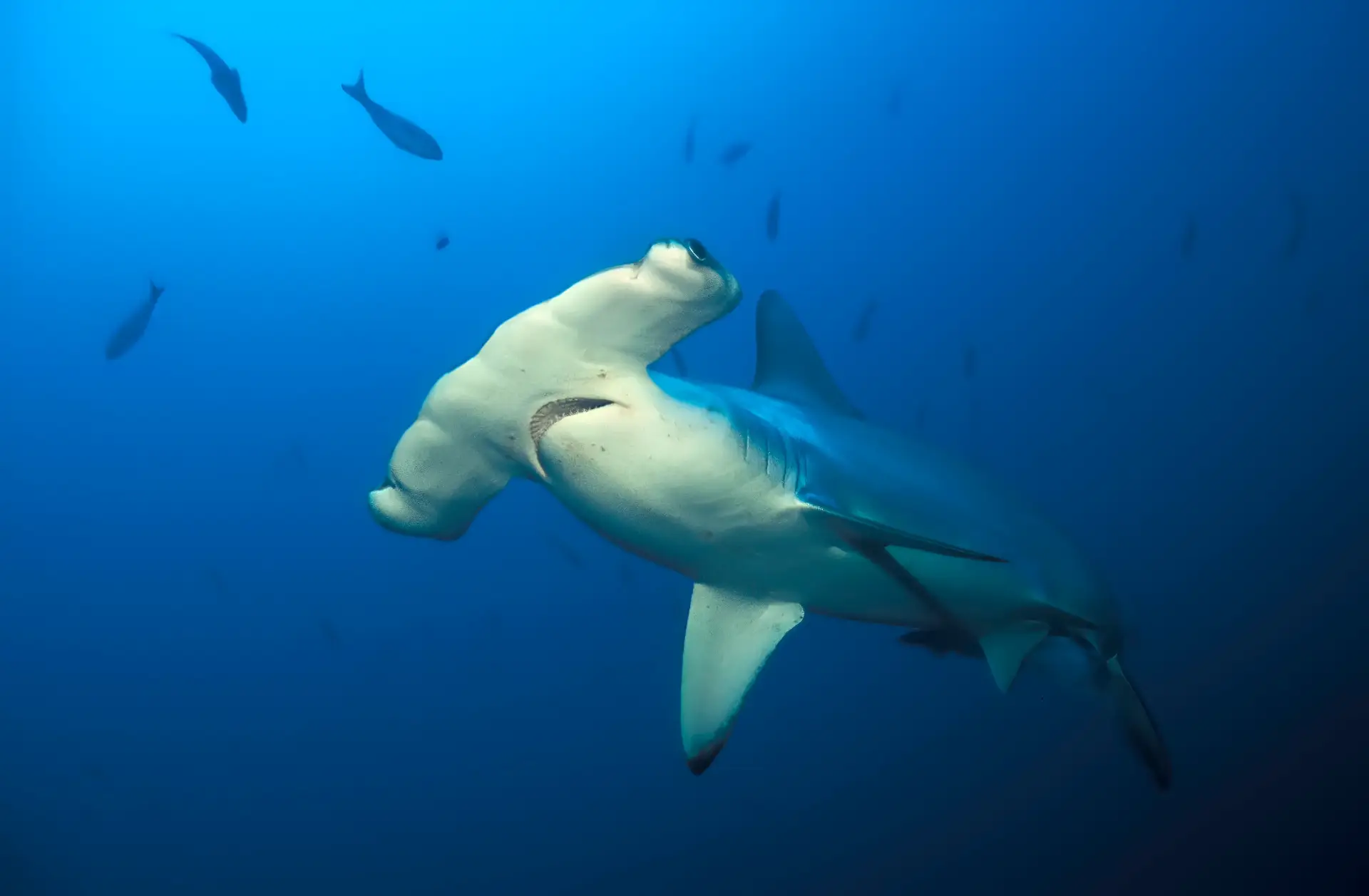
The Hammerhead is perhaps the most visually striking shark in the world. Their unique “cephalofoil” head isn’t just for looks; it acts as a sensory organ, allowing them to detect the minute electrical impulses of prey hidden in the sand and providing them with 360-degree vision.
-
Where to find them: Hammerheads love current and cool water. They are most commonly seen at the North Point of Daedalus Reef or the back of Jackson Reef in the Straits of Tiran.
-
The Experience: They are notoriously shy. To see them, you usually have to head into the “blue,” away from the reef. Seeing a school of 30 Hammerheads pulsing through the morning light is a sight that stays with a diver forever.
 2. The Oceanic Whitetip (Carcharhinus longimanus)
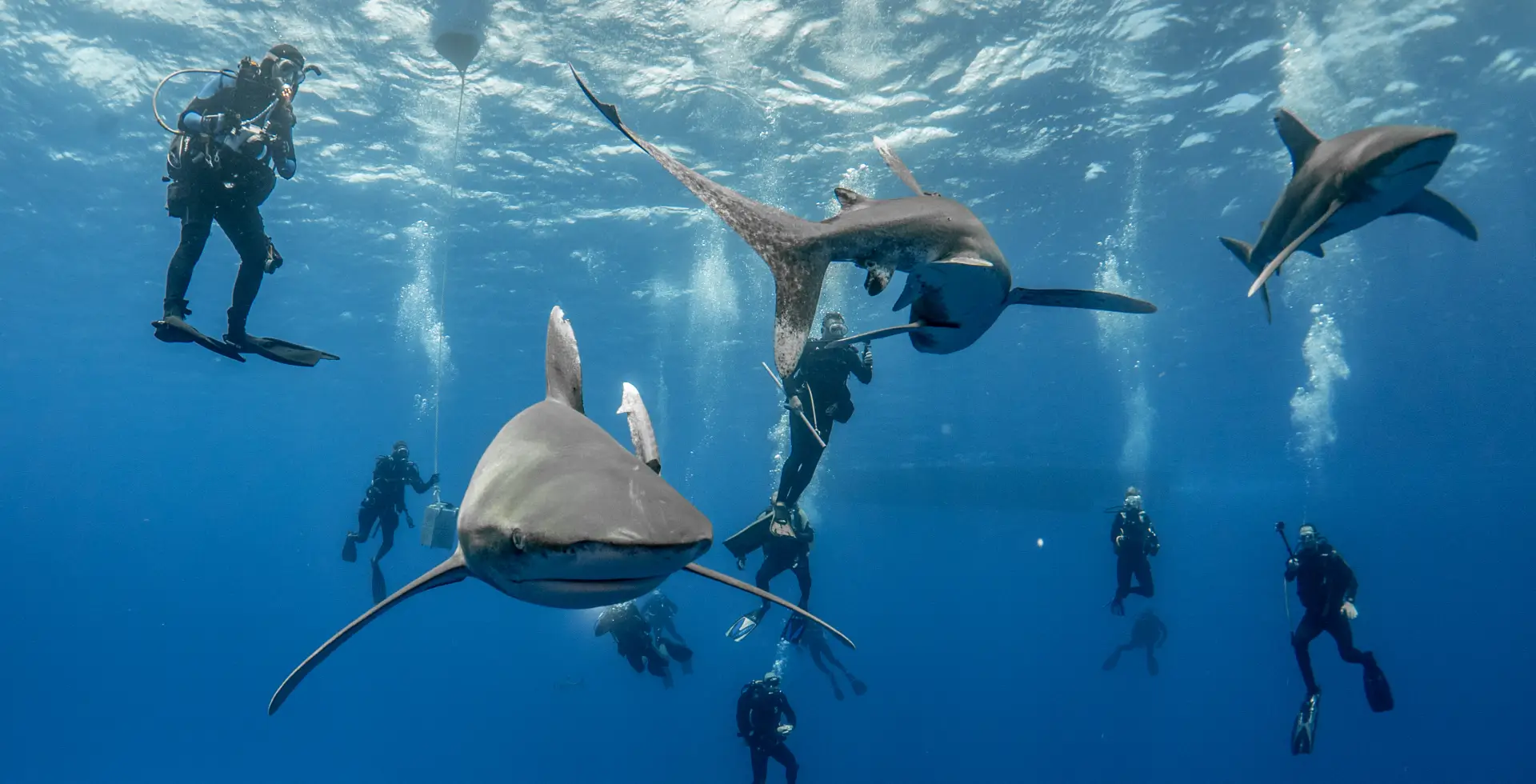
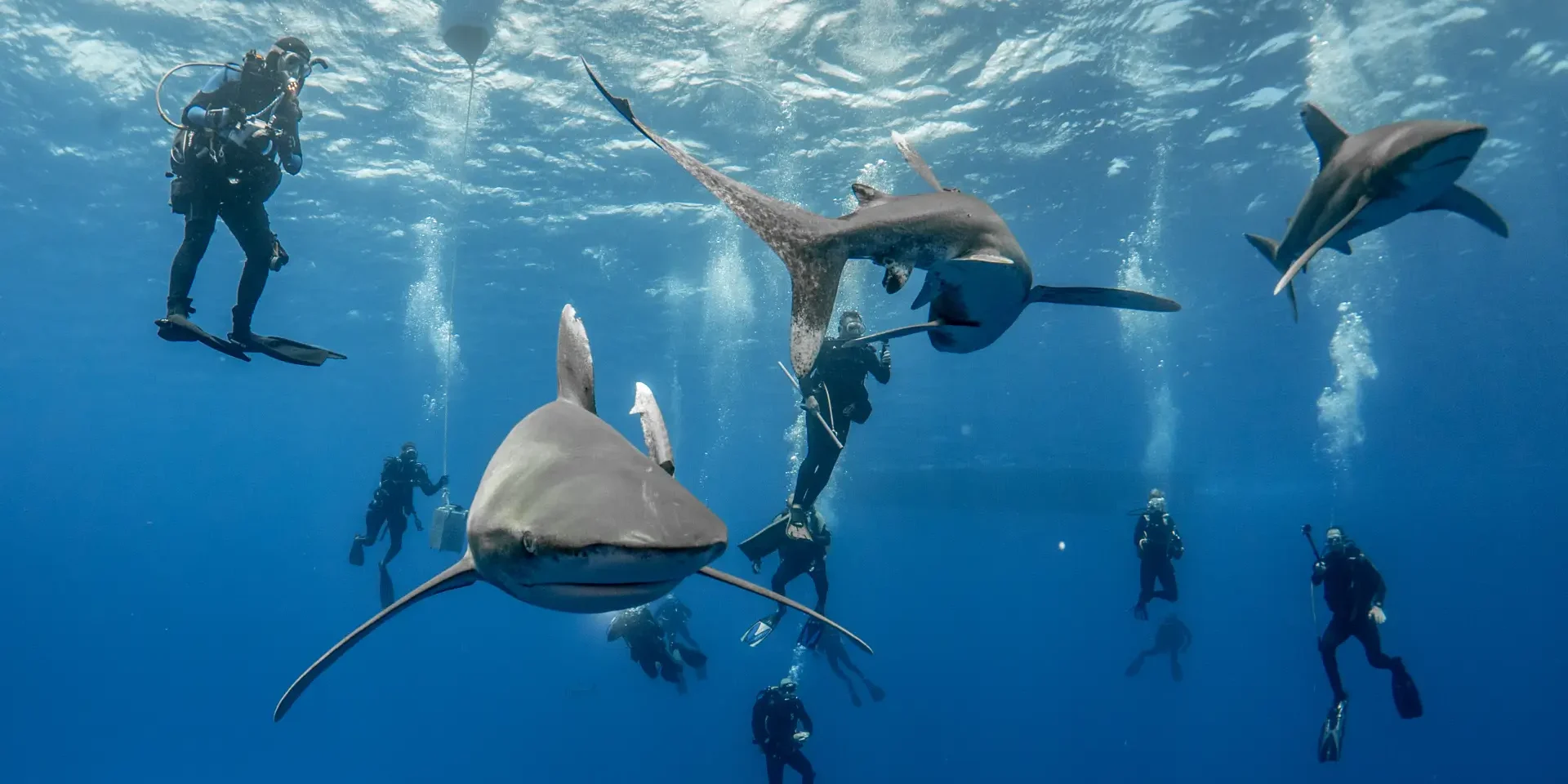
Not to be confused with the smaller Whitetip Reef Shark, the “Longimanus” is a true pelagic wanderer. With its huge, paddle-like pectoral fins and bold, inquisitive nature, it is the undisputed boss of the open ocean.
-
Where to find them: They follow the boats. You’ll often find them patrolling under the dive decks at Elphinstone or The Brothers.
-
The Experience: This is an interactive shark. They aren’t shy; they will swim right up to a group of divers to investigate. They are beautiful, powerful, and require a high level of respect and situational awareness.
 3. The Whale Shark (Rhincodon typus)
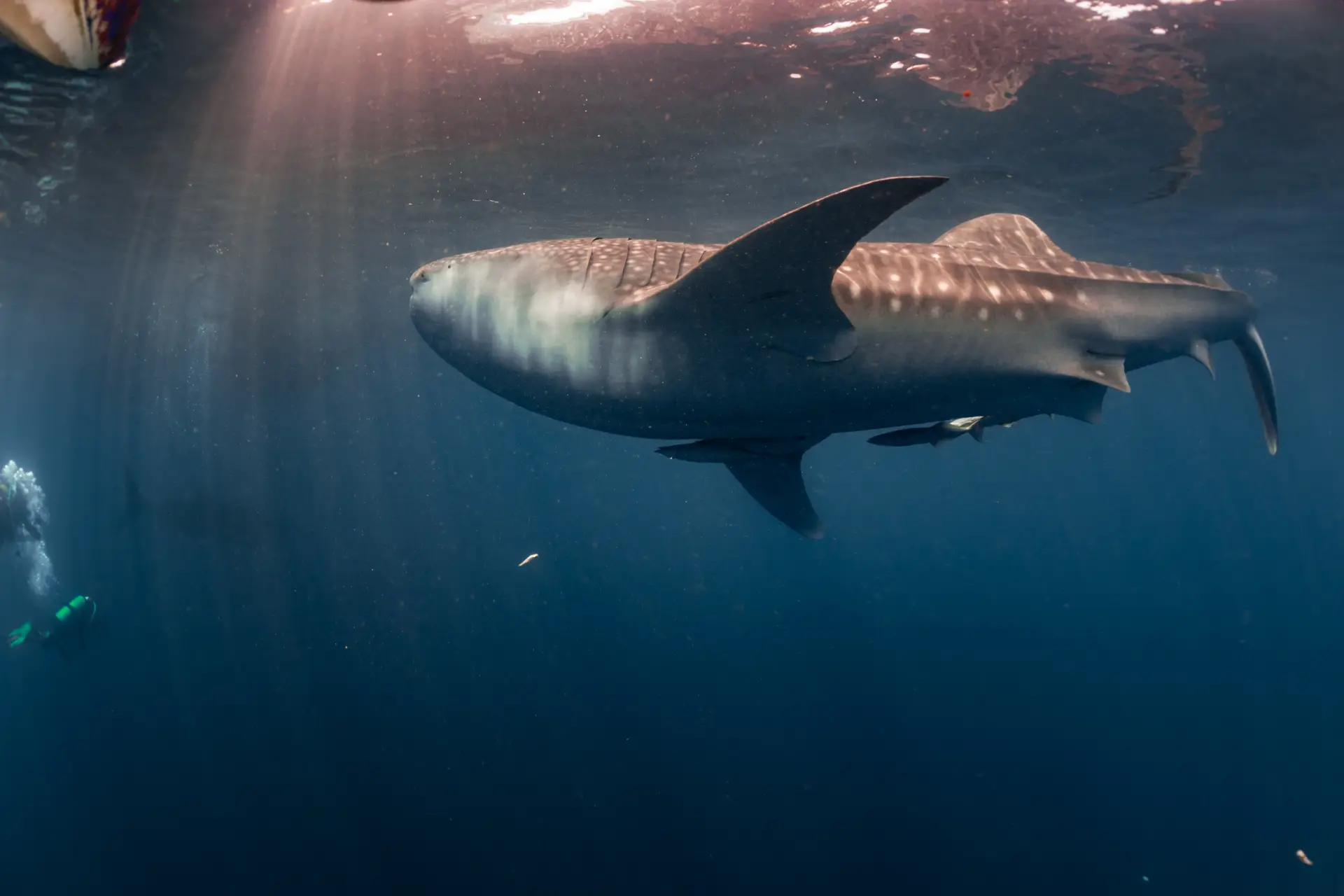
The “Gentle Giant.” While technically a shark (the largest fish in the sea), the Whale Shark is a filter feeder that survives on plankton and small fish.
-
Where to find them: Sightings are unpredictable, but they are most common during the plankton blooms in the late spring and early summer. They are often spotted near the surface in the Northern Red Sea or cruising the walls of Ras Mohammed.
-
The Experience: Total awe. Being in the water with a 10-meter-long animal that moves with such effortless grace is a humbling experience.
The Reef Residents
While the big pelagics get the glory, the “locals” are just as fascinating.
-
Whitetip Reef Sharks: These are the most common sharks you’ll see. They are small, slender, and often found “napping” on sandy patches or tucked into reef crevices during the day. They are harmless and provide great opportunities for photography.
-
Grey Reef Sharks: These are the “sentinels” of the reef. They are stocky, medium-sized sharks that are very territorial. You’ll often see them patrolling the drop-offs at Shark & Yolanda Reef in Ras Mohammed.
-
Thresher Sharks: Occasionally, if you are very lucky and very deep at the Brothers or Daedalus, you might see the long, whip-like tail of a Thresher Shark emerging from the gloom.
The Seasonal Calendar: When to See What
To maximize your shark sightings, you have to time your trip with the “shark calendar”:
-
May – July: Prime time for Whale Sharks and the massive spawning aggregations of snappers and jacks that draw in other predators.
-
June – September: The best time for Hammerheads at Daedalus, as they move slightly shallower to follow the thermoclines.
-
October – December: This is “Longimanus Season.” The Oceanic Whitetips are very active at Elphinstone and the Brothers during these months.
Ethical Encounters: Shark Safety for Divers
Diving with sharks is an exercise in mutual respect. While the “Jaws” narrative is long dead, these are still wild, apex predators.
-
Don’t Chase: If a shark swims away, let it go. Chasing them only causes stress and ends the encounter for everyone.
-
Stay Grouped: Sharks are less likely to approach a tight-knit group of divers. Avoid wandering off into the blue alone.
-
Verticality Matters: Especially with Oceanic Whitetips, stay vertical in the water column and maintain eye contact. This signals to the shark that you are a fellow predator, not a prey item.
-
No Bubbles on the Belly: Avoid swimming directly under a shark; the rising bubbles can be perceived as an aggressive gesture.
-
Listen to Your Guide: Red Sea dive guides spend thousands of hours with these animals. Their “shark sense” is your best asset for a safe and rewarding dive.
The Conservation Reality
The Red Sea is a sanctuary, but sharks worldwide are under threat from overfishing and the finning trade. By choosing to dive in Egypt, you are contributing to a tourism economy that proves sharks are worth more alive than dead. Every photo shared and every story told helps to replace fear with fascination.
Sharing the water with a shark is a privilege. It is a reminder that the ocean is still a wild, untamed place. Whether it’s the silver flash of a Hammerhead in the distance or the slow, curious circle of a Longimanus, a shark dive in the Red Sea is a soul-stirring experience that reminds us why we started diving in the first place.