The Top 5 Animals To See While Scuba Diving The Red Sea
For many scuba divers, the Red Sea represents the pinnacle of the sport. With visibility that often exceeds 30 meters, water temperatures that remain comfortable year-round, and a level of endemic biodiversity found nowhere else on Earth, it is a true underwater paradise.
But beyond the vibrant coral gardens and the legendary wrecks like the SS Thistlegorm, it is the “mega-fauna” that draws divers back year after year. The Red Sea is home to some of the most unique and charismatic marine life in the world. If you are planning a dive trip to Hurghada or some other town on the Egyptian or Saudi coastlines, these are the five animals that should be at the very top of your “must-see” list.
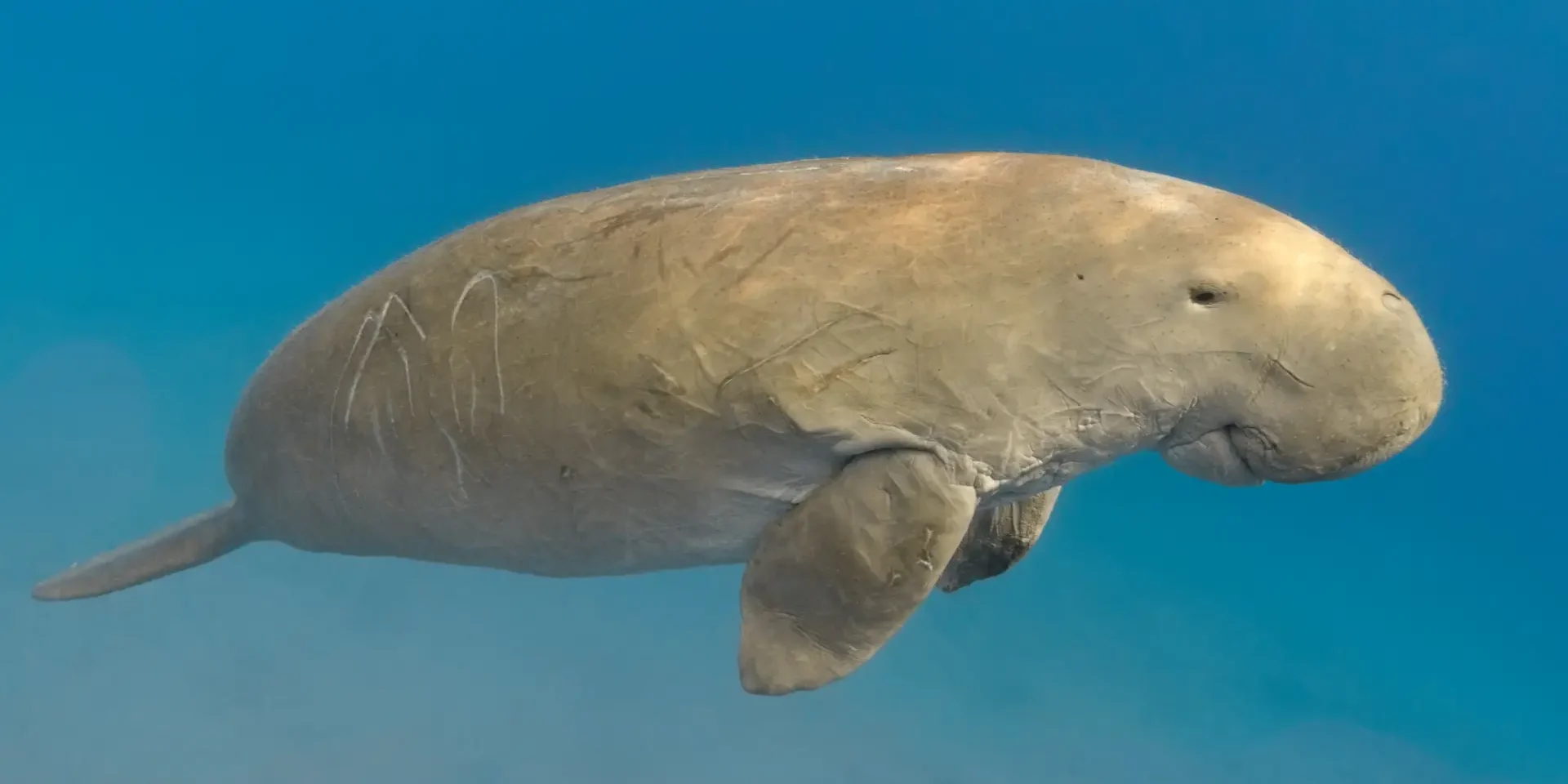
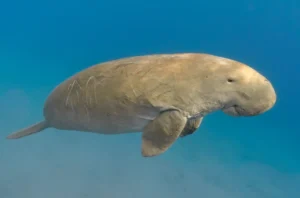 1. The Dugong (The “Sea Cow” of Marsa Alam)
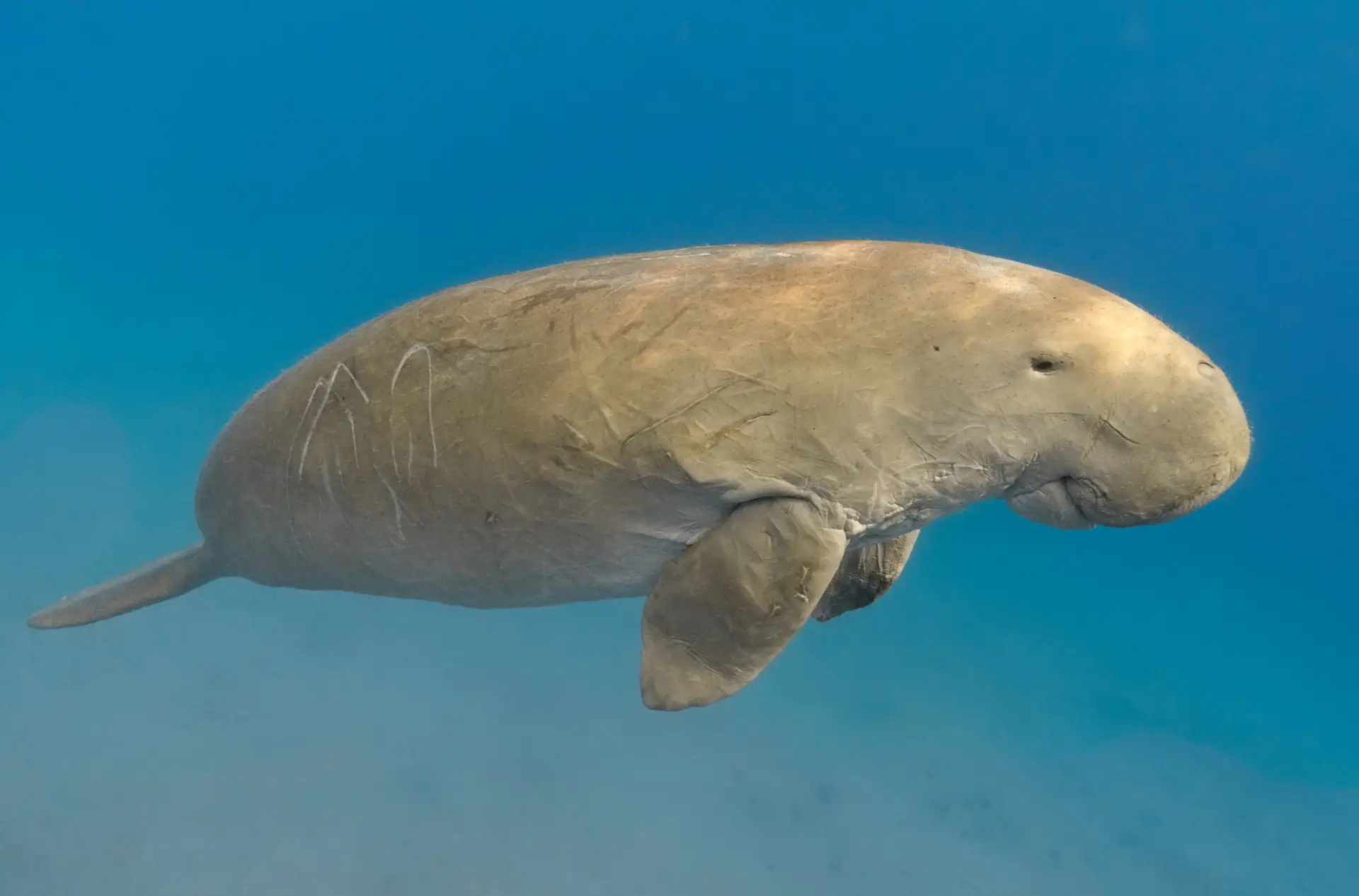
Perhaps the most sought-after and elusive resident of the Red Sea is the Dugong (Dugong dugon). Often referred to as “sea cows” because of their strictly herbivorous diet, these gentle mammals are a rare sight globally. While their cousins, the manatees, are found in the Atlantic, the Red Sea is one of the few places in the world where you can reliably (though never guaranteed) encounter a Dugong in its natural habitat.
Where to find them: The southern Egyptian coast near Marsa Alam is the Dugong capital of the Red Sea. They frequent shallow, sheltered bays with extensive seagrass meadows.
-
Abu Dabbab Bay: Famous for its resident Dugong, “Dennis.”
-
Marsa Mubarak: Another hotspot where the seagrass is lush and the water is shallow.
The Experience: Seeing a Dugong is a lesson in patience. They are shy and easily spooked by heavy bubbles and loud noises. Often, you will spot them grazing peacefully on the seafloor at 5–10 meters deep. When they need to breathe, they slowly ascend to the surface, take a quick gulp of air, and descend back to their meal. Watching a 3-meter-long, 400kg mammal glide effortlessly through the water is a serene, almost spiritual experience.
2. The Oceanic Whitetip Shark (Longimanus)
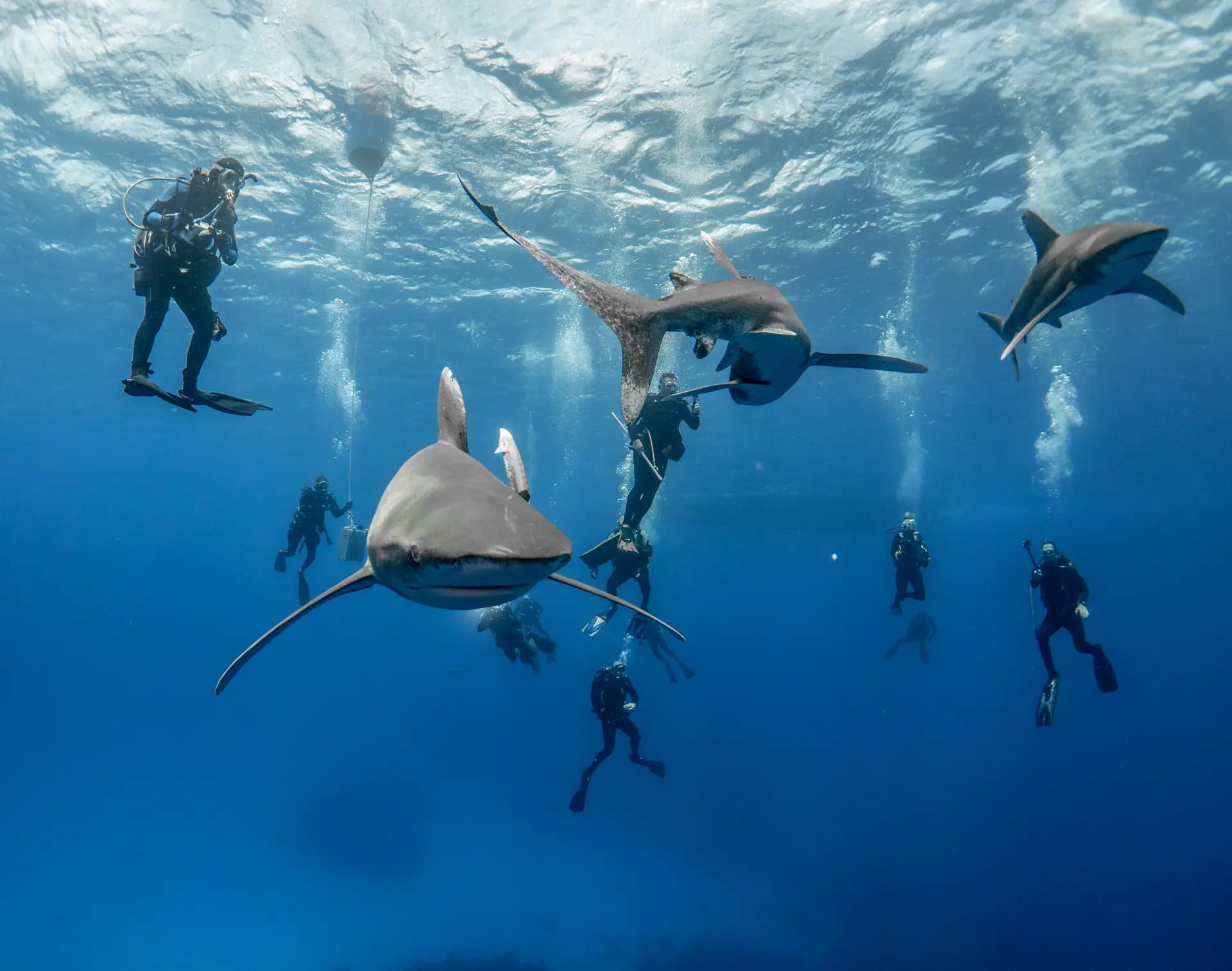 If the Dugong represents the gentle side of the Red Sea, the Oceanic Whitetip (Carcharhinus longimanus) represents its raw, predatory power. Not to be confused with the smaller, timid Whitetip Reef Shark, the “Longimanus” is a pelagic giant known for its bold, inquisitive nature.
Where to find them: These are open-ocean sharks. They prefer offshore reefs where deep walls drop into the abyss.
-
The Brothers Islands (El Akhawein): A legendary spot for close encounters.
-
Daedalus Reef: Often found cruising the blue or patrolling under dive boats.
-
Elphinstone Reef: Famous for “Longimanus” sightings, especially in the autumn months.
The Experience: Diving with an Oceanic Whitetip is a high-adrenaline event. Unlike many sharks that flee at the sight of divers, the Longimanus is known for approaching. They are curious and will often circle a group of divers or swim directly toward a photographer before veering off at the last second. They are easily identified by their huge, paddle-like pectoral fins and dorsal fins, both tipped with a distinct mottled white.
3. The Scalloped Hammerhead Shark
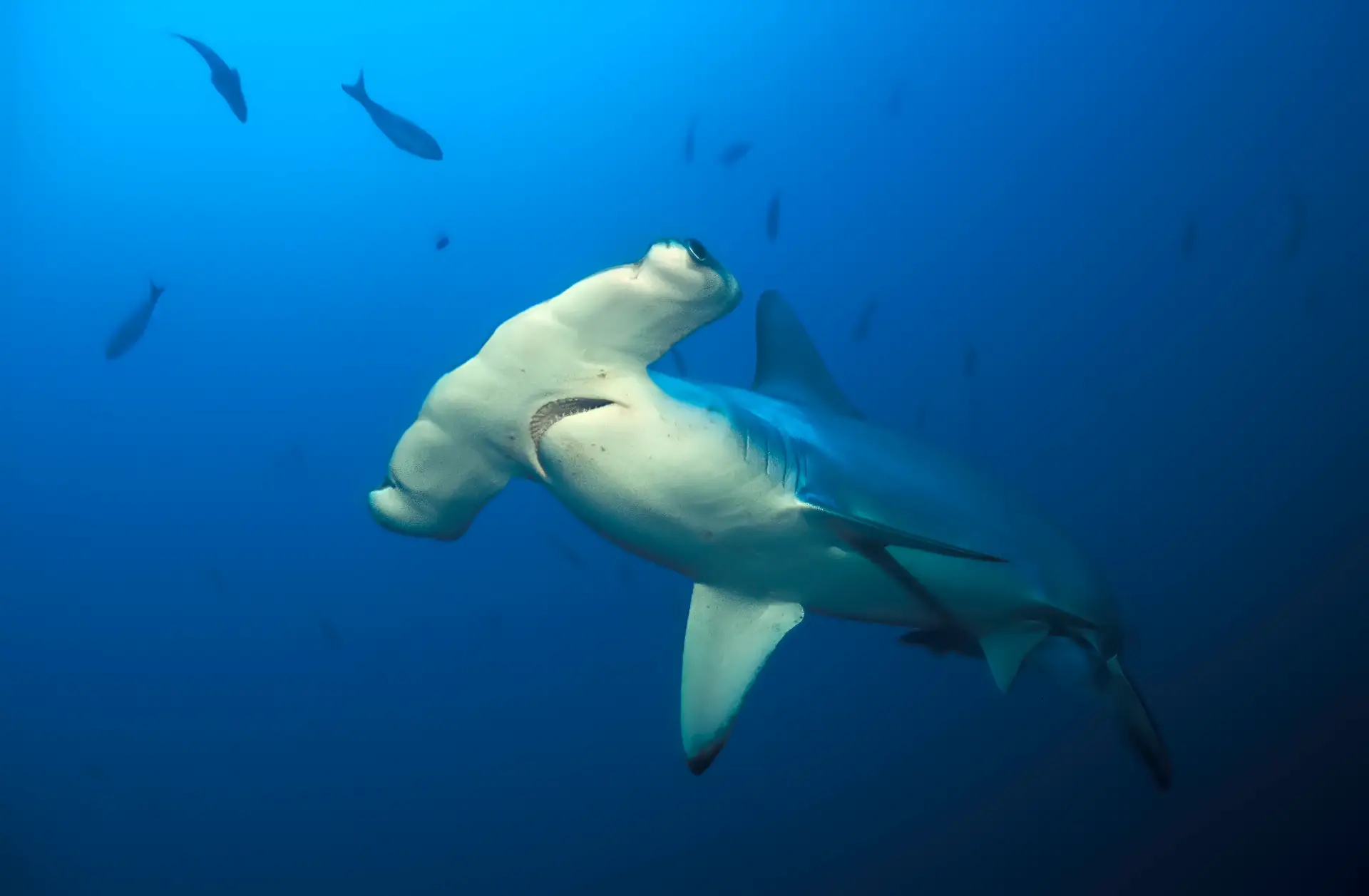 There is arguably no sight more iconic in the diving world than a school of Scalloped Hammerheads (Sphyrna lewini) silhouetted against the morning sun. While they can be found in various tropical oceans, the Red Sea’s Daedalus Reef is one of the most consistent places on the planet to see them in large numbers.
Where to find them: Hammerheads love current and cool water. They are typically found on the deep, current-swept points of offshore reefs.
-
Daedalus Reef: Specifically the North Point in the early morning.
-
Jackson Reef (Tiran Straits): A great spot in the northern Red Sea near Sharm El Sheikh.
The Experience: To see the Hammerheads, you usually have to “go into the blue.” Divers will often hang at 25–30 meters, looking out away from the reef into the deep open water. When the current is right, you might see a solitary individual or, if you’re lucky, a massive school of 20 to 50 sharks pulsing through the water. Their unique “cephalofoil” head shape and rhythmic, side-to-side swimming style make them unmistakable.
4. The Napoleon Wrasse (The Humphead Wrasse)
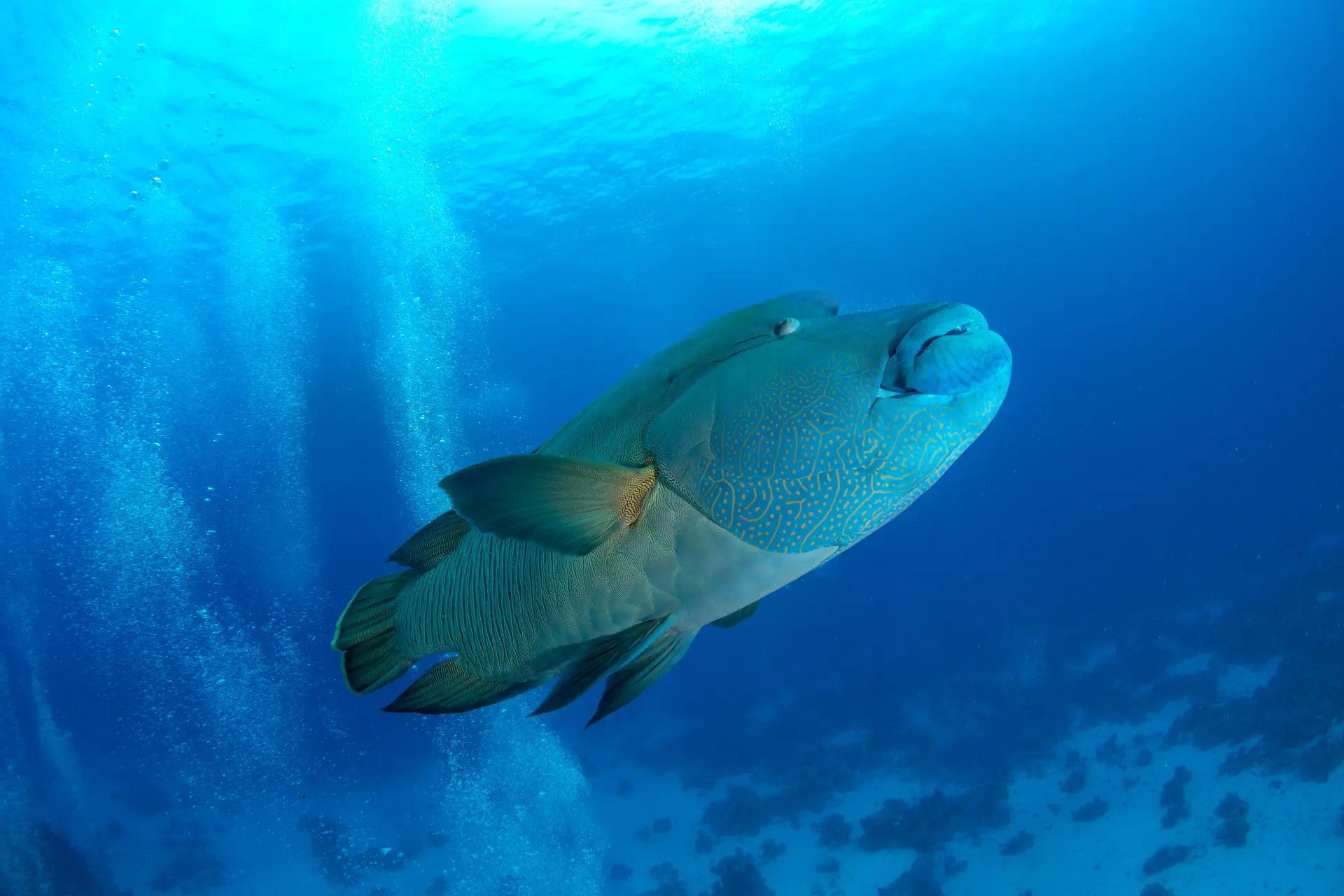 The Napoleon Wrasse (Cheilinus undulatus) is the unofficial mascot of the Red Sea reefs. These are among the largest reef fish in the world, with males growing up to two meters in length. Despite their size and formidable appearance—complete with a large forehead hump and thick, pouty lips—they are known as the “friendly giants” of the sea.
Where to find them: They are ubiquitous throughout the Red Sea, but certain sites are famous for resident individuals that have become accustomed to divers.
-
Ras Mohammed National Park: Specifically Shark & Yolanda Reef.
-
Sharm El Sheikh: Many local reefs have “resident” Napoleons that will follow dive groups like a puppy.
The Experience: What makes the Napoleon Wrasse special is its curiosity. While most fish dart away as you approach, a Napoleon will often swim right up to you, looking you in the eye with its large, independently moving orbs. They seem as interested in divers as we are in them. Their scales are a beautiful mosaic of greens, blues, and yellows, making them a favorite subject for underwater photographers.
5. Spinner Dolphins
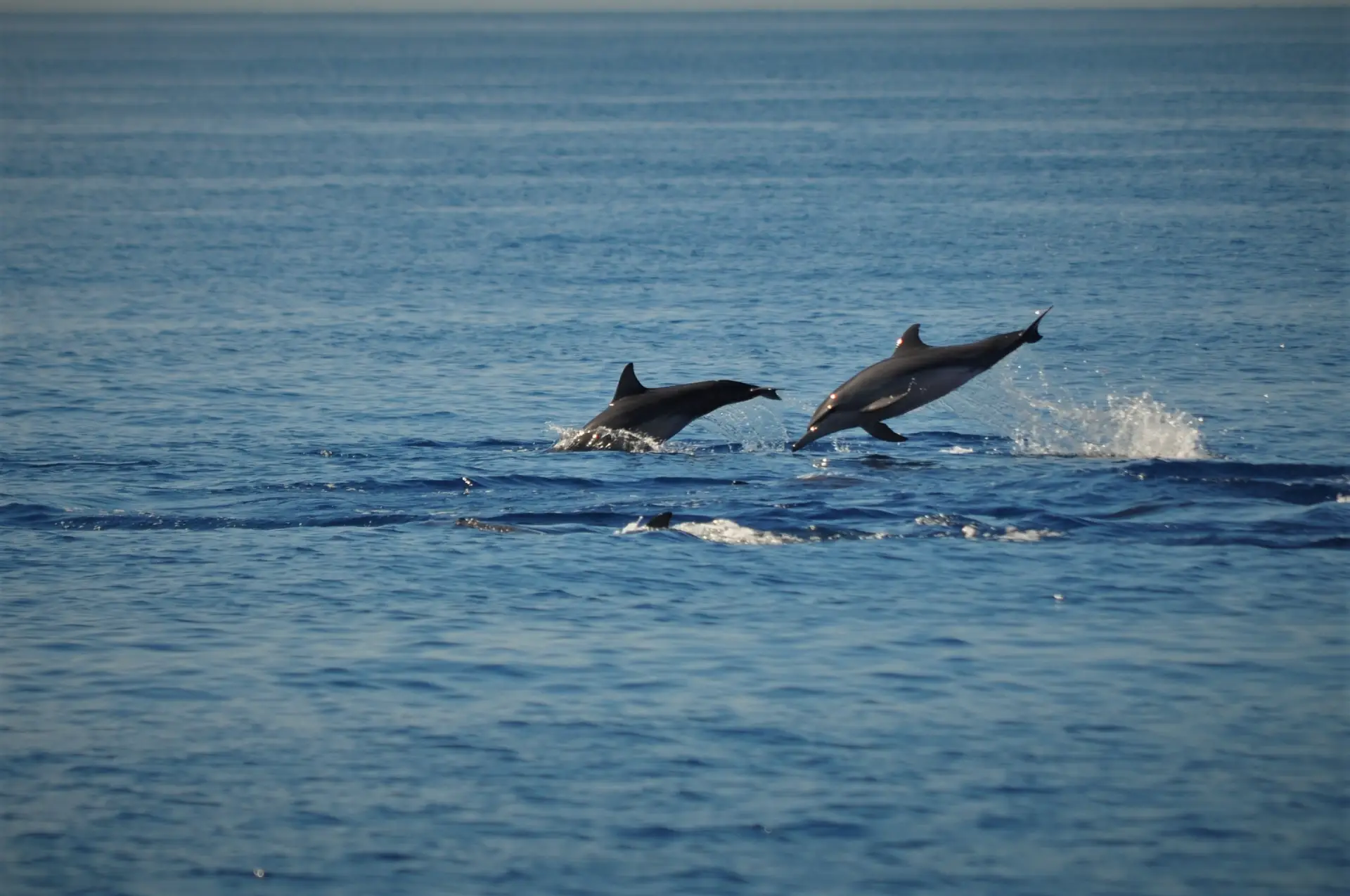 While many divers hope for a chance encounter with dolphins during a safety stop, the Red Sea offers the opportunity to intentionally dive or snorkel with massive pods of Spinner Dolphins (Stenella longirostris). These dolphins are famous for their acrobatic displays, leaping from the water and spinning through the air.
Where to find them: There are specific “Dolphin Houses”—protected lagoons where pods come to rest and socialize during the day.
-
Sha’ab Samadai (Marsa Alam): A horseshoe-shaped reef that is a strictly regulated marine park.
-
Sataya Reef (Fury Shoals): A massive lagoon where pods of over 100 dolphins are frequently spotted.
The Experience: Whether you are on scuba or snorkeling, being in the water with a pod of dolphins is pure joy. You’ll hear their clicks and whistles before you see them. Suddenly, dozens of sleek shapes emerge from the blue, gliding past you with effortless speed. In places like Sataya, they are often playful, circling swimmers and showing off their agility. It is a high-energy encounter that usually ends with the entire boat buzzing with excitement.
Honoring the Red Sea
Diving in the Red Sea is a privilege. As you seek out these “Big Five,” remember that many of them—especially the sharks and the Dugong—are listed as vulnerable or endangered. Always follow the instructions of your dive guides, maintain perfect buoyancy to protect the reef, and never attempt to touch or chase the marine life.
The Red Sea is a vibrant, living ecosystem. Whether you find the elusive Dugong or spend your dive surrounded by a “cloud” of orange Anthias, every submerged minute in these waters is a gift.