Into the South: Top 5 Scuba Diving Destinations in the Southern Hemisphere
When the winter months roll in across North America and Europe, the diving community naturally starts looking for an escape. For many, the instinct is to chase the sun to established northern tropical hotspots—perhaps escaping to the Caribbean or planning some world-class scuba diving in Bohol to enjoy the warm, calm waters of the Visayas.
But if you are willing to pack your dive bag and cross the equator, a massive, wild, and incredibly diverse frontier awaits.
The Southern Hemisphere offers an entirely different flavor of diving. Because the seasons are flipped, their summer peaks when the north is freezing. Geographically, the southern oceans are vast, remote, and home to some of the most dramatic pelagic encounters on the planet. If you are looking to build the ultimate global logbook, here are five Southern Hemisphere destinations that belong at the top of your list.
 1. Fiji: The Soft Coral Capital of the World
If you want color, you go to Fiji. Located in the South Pacific, this archipelago of over 300 islands is globally recognized as the “Soft Coral Capital of the World.”
The Diving Experience: Fiji’s reefs are dominated by Dendronephthya soft corals. When the tidal currents run through the narrow channels (passages) between the islands, these corals inflate with water, transforming the reef into a vibrant, neon-colored forest of pinks, purples, and oranges.
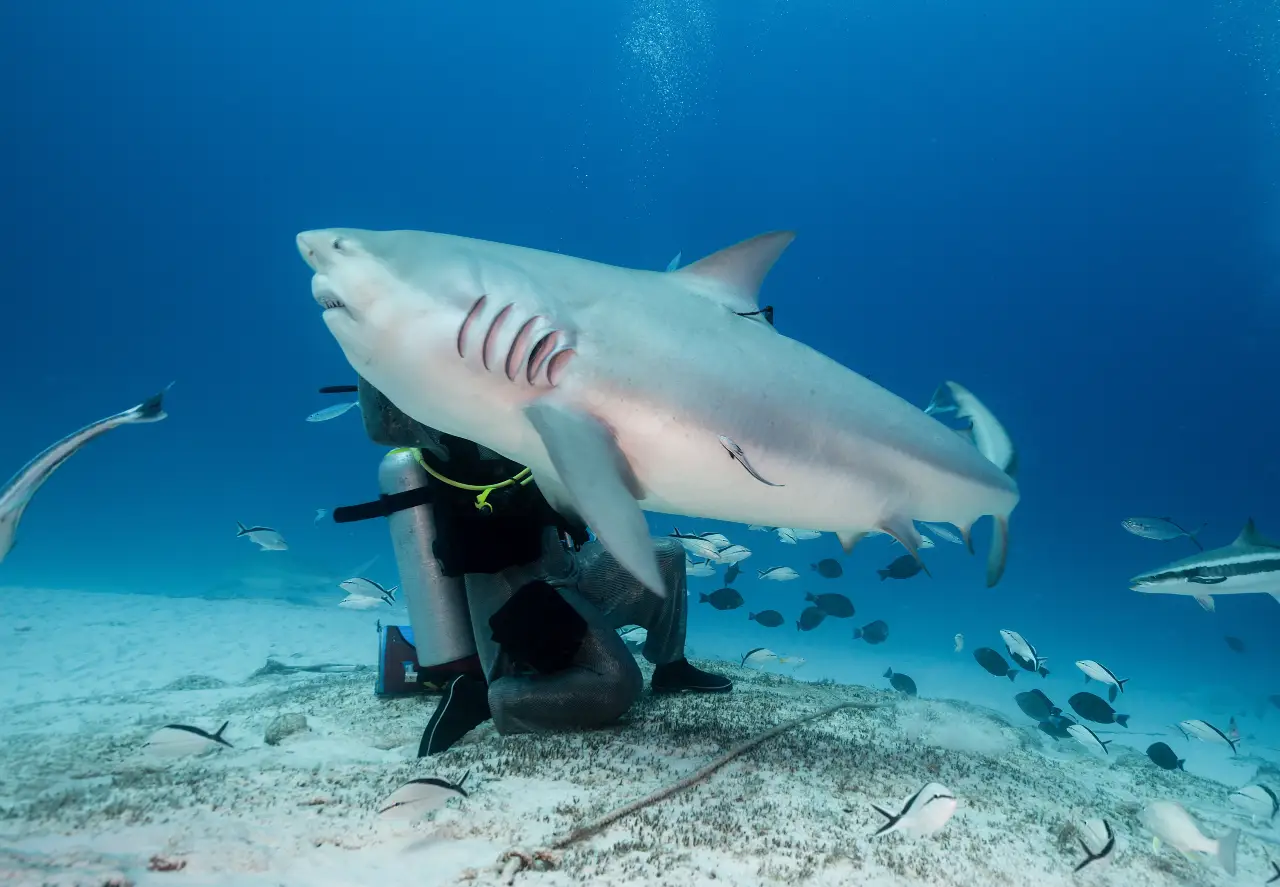
Beyond the spectacular colors, Fiji is also famous for its shark diving. Specifically, the Beqa Lagoon offers one of the most intense, un-caged shark encounters in the world, where divers can see up to eight different species on a single dive, including massive Tiger Sharks and Bull Sharks.
2. Komodo National Park, Indonesia: Dragons and Drifts
While the northern parts of Indonesia sit on the equator, Komodo National Park lies firmly in the southern half. It is a place of raw, untamed nature, where arid, volcanic islands meet deep, churning ocean currents.
The Diving Experience: Komodo is not for the faint of heart; it is drift diving at its most exhilarating. The park sits at a massive marine bottleneck where the warm waters of the Pacific Ocean crash into the cooler waters of the Indian Ocean. This creates nutrient-rich upwellings that fuel an explosion of marine life.
Sites like Batu Bolong and The Cauldron offer dizzying displays of anthias, schooling trevally, and cruising reef sharks. In the southern part of the park, sites like Manta Alley offer the chance to hover in the chilly, nutrient-dense water while dozens of majestic manta rays line up at cleaning stations.
3. Queensland, Australia: The Coral Sea and the Great Barrier Reef
No list of Southern Hemisphere diving is complete without mentioning Australia. While the inner Great Barrier Reef is accessible for day-trippers, the true magic for seasoned divers lies further offshore in the Coral Sea.
The Diving Experience: Reachable only via liveaboard, the Coral Sea is characterized by ancient volcanic seamounts that rise thousands of meters from the ocean floor. The water here is staggeringly clear, often offering visibility in excess of 40 meters.
Sites like Osprey Reef are legendary. The sheer vertical walls are patrolled by massive schools of pelagic fish, silvertip sharks, and the occasional hammerhead. It is a remote, pristine wilderness that offers a stark, deep-blue contrast to the shallow coral gardens found closer to the mainland.
4. Rangiroa, French Polynesia: The Wall of Sharks
Floating in the middle of the South Pacific, French Polynesia is the ultimate definition of remote. Within this massive area lies the Tuamotu Archipelago, home to Rangiroa, the second-largest coral atoll in the world.
The Diving Experience: Rangiroa is famous for one very specific type of diving: shooting the pass. The atoll features a massive lagoon that empties and fills with the tides through a narrow channel known as Tiputa Pass.
When the incoming tide rushes from the open ocean into the lagoon, divers drop in and “fly” with the current. This pass is globally famous for its “Wall of Sharks.” It is common to drift past hundreds of Grey Reef Sharks hanging effortlessly in the current, alongside playful bottlenose dolphins, eagle rays, and massive schools of barracuda. It is high-speed, high-adrenaline, big-animal diving at its finest.
5. Aliwal Shoal, South Africa: The Adrenaline Rush
If you are looking to trade warm tropical waters for something with a bit more bite, the eastern coast of South Africa is calling. Located just south of Durban, Aliwal Shoal is a fossilized sand dune that has become one of the most exciting dive sites in the Indian Ocean.
The Diving Experience: South Africa is synonymous with sharks, and Aliwal Shoal delivers. Depending on the season, you can dive with dozens of Ragged-Tooth Sharks (Sand Tigers), Oceanic Blacktips, and even Tiger Sharks.
The conditions here are rugged. You launch through the surf in a Zodiac (RIB) boat, and the water temperatures require a thick wetsuit. But the reward is an incredibly raw, natural encounter with some of the ocean’s most formidable predators. If you time your trip for the southern winter (June to July), you might even catch the edge of the famous Sardine Run, often described as the greatest marine migration on Earth.
Flipping the Script on Your Dive Year
The beauty of global scuba diving is that it is always “peak season” somewhere. When the northern waters start to cool and the days get shorter, the Southern Hemisphere is just warming up. Whether you want the neon soft corals of Fiji, the roaring currents of Komodo, or the shark-filled passes of French Polynesia, crossing the equator is the perfect way to keep your logbook active all year long.