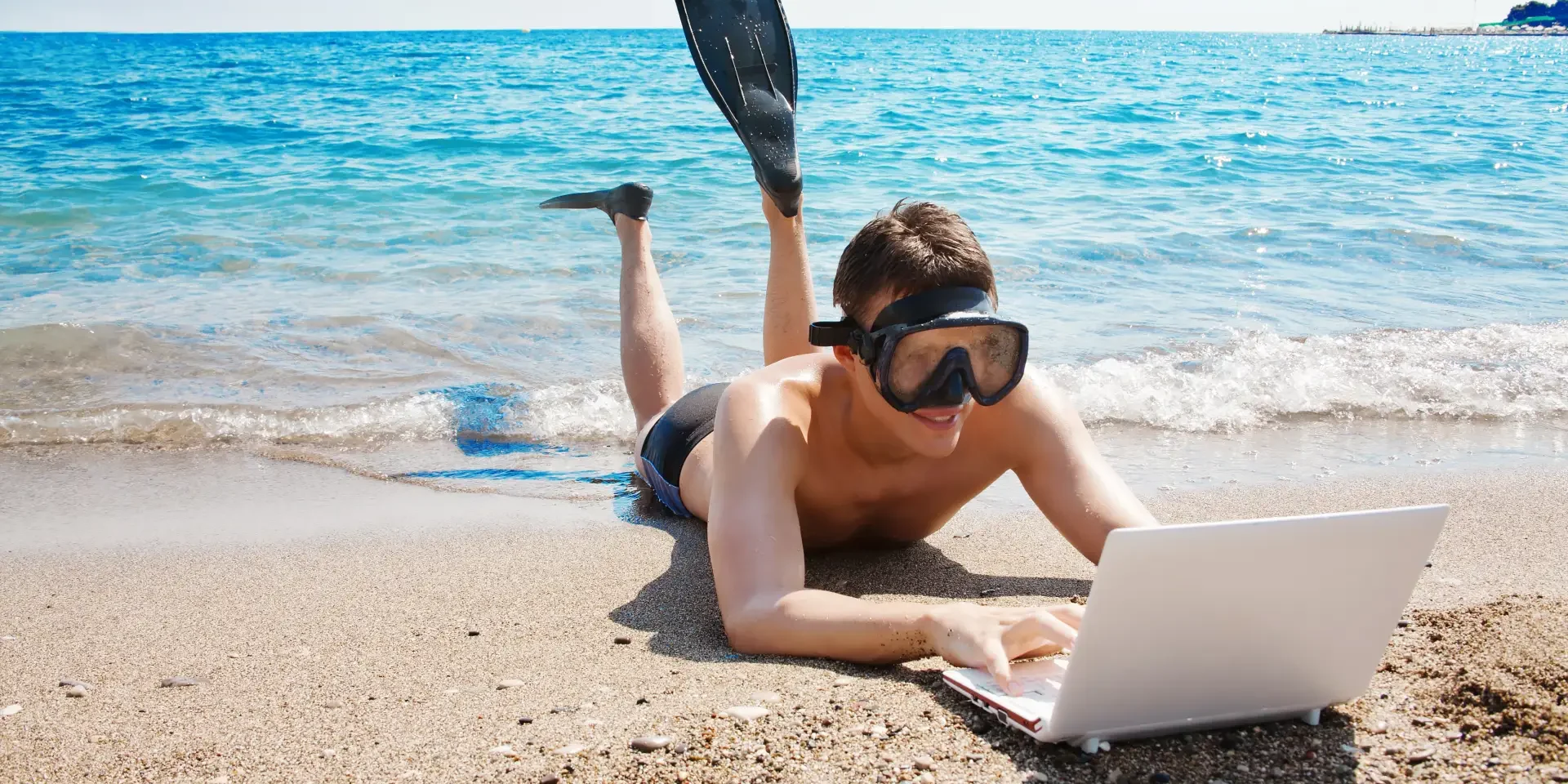
It’s 6:45 a.m. and your laptop is still in its bag. Instead of a commute, you’re walking down Alona Beach with a coffee in one hand and a mask in the other. By lunchtime you’ve logged two dives. By two o’clock you’re back at a café table, answering emails with salt still drying in your hair.
That’s the pitch for working remotely from Panglao, and it’s a real thing people do. It also takes a bit more planning than the Instagram version suggests. Here’s what the setup actually looks like.
Why Panglao Works for Remote Workers
Panglao is a small island connected to Bohol by bridge, and the Alona Beach area packs a lot into a short stretch. Cafés, restaurants, guesthouses, dive shops, a few small shops and a long beach are all within easy walking distance. You don’t need a car to get through your day.
The Philippines also runs eight hours ahead of UTC, which suits some home time zones better than others. If your clients are in Australia or Asia, you’re nicely lined up. If you’re working with Europe, your afternoon is their morning, which works well. If your team is in North America, you’ll be taking calls in the evening, so plan for that before you book anything.
The Diver’s Daily Rhythm
Most boat dives leave in the morning, when the water is calmer and the sites are quieter. That’s a gift for anyone with a work schedule. You can dive from early morning until about midday, then settle into a proper working afternoon.
A typical day might look like this:
- Early start, quick breakfast, boat out by mid-morning
- One or two dives, back on land before lunch
- Long lunch, shower, laptop open by early afternoon
- Work until dinner, with maybe a sunset walk in between
Some people dive three or four mornings a week and keep the rest as pure work days. Others dive daily for the first week, then settle into a slower rhythm. There’s no right answer. Just be honest with yourself about how tired you’ll be. Diving is gentle exercise, but it makes you hungry and sleepy, and a post-dive nap can quietly eat your afternoon.
The Practical Stuff Nobody Mentions
Internet. It varies. Some guesthouses and cafés have solid connections, others have wifi that’s more of a suggestion. Before you commit to a place for a month, ask for a speed test, or just do one yourself on arrival. A local SIM with a data plan makes a good backup, and it’s worth having even if your accommodation looks reliable.
Power. Outages happen now and then. Keep your devices charged, and consider a power bank. If you’ve got a big deadline or an important call, have a plan B nearby, like a café with a generator.
Visas. Rules on visitor stays and remote work change, so check the current requirements with official sources before you travel. Don’t rely on a blog post from two years ago, and that includes this one.
Accommodation. Monthly rates are usually friendlier than nightly ones, so if you’re staying a while, ask. Having a proper desk and a decent chair matters more than a pool view when you’re working six hours a day.
Flying After Diving
This one catches people out. If you’re diving regularly, you can’t just hop on a plane the morning after your last dive. Standard guidance is to wait at least 12 hours after a single dive, and 18 hours or more after multiple days of repetitive diving. A longer gap is better. If you’re heading to a conference or a meeting somewhere else, build that buffer into your plans.
Using the Time to Level Up
The nice thing about staying for weeks instead of days is that you can actually progress. Plenty of nomads arrive with an Open Water card and leave with Advanced, Nitrox or a few specialties. Others start from zero and get certified in their first week, then spend the rest of the stay just diving.
Spreading learning across a longer stay is easier on your head, too. You can fit a theory session into a quiet afternoon and do your dives in the morning, instead of cramming everything into a few days. If you’re thinking about it, have a look at the diving courses in Bohol to see what could fit around your work schedule.
Variety Keeps It Fresh
The other benefit of a longer stay is that you can explore. Balicasag Island is the famous one, with its walls and turtles, but there’s a lot more within reach. Pamilacan, Doljo Point, Napaling and a string of smaller sites all feel different. It’s worth browsing the dive sites around Bohol and building yourself a bit of a wish list for the weeks ahead.
You’ll also start to notice things. After a few weeks of regular diving, you get your eye in. Frogfish stop being invisible, a sea snake in the sand becomes something you spot before your guide does, and you start recognizing the same turtle at the same site. The marine life of Bohol rewards repeat visits more than almost anywhere.
A Few Honest Tips
Don’t overschedule your first week. Give yourself a couple of days to settle in, find your café, test the wifi and get used to the heat.
Protect your work hours. It’s tempting to say yes to every boat trip, island tour and sunset beer. Pick your battles, or you’ll end the month with a great logbook and an unhappy boss.
Look after your body. Drink plenty of water, wear sunscreen that’s kind to reefs, and don’t stack your hardest work day after your deepest dive day.
And meet people. Panglao has a good mix of travelers, expats and dive pros, and a lot of the best tips come from chatting over a table at dinner.
Is It Worth It?
For the right person, absolutely. You trade a long commute for a short walk to the beach, and a lunch break becomes a dive. Just go in with realistic expectations about internet, work-life balance and how tired salt water makes you.
If you’re curious how a longer stay could look for you, get in touch with your rough dates and what you’d like to learn or see, and sort out a plan from there.